HOW TO CLEAN YOUR KEGS TO PRESERVE THE UNIQUE ATTRIBUTES OF YOUR BEER
Beer stored in THIELMANN stainless steel kegs preserves its original physical, chemical and sensory properties for longer periods of time.


📰 CASE STUDY

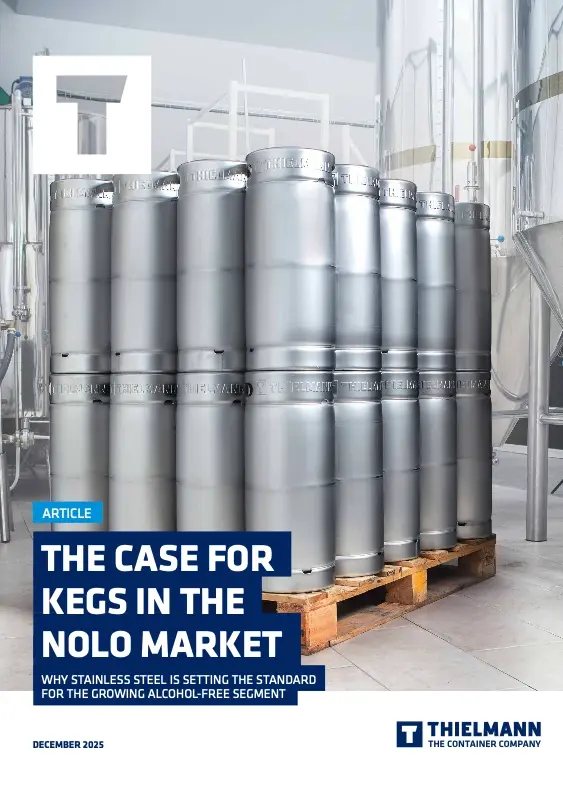
THE NOLO MARKET NEEDS TO SCALE SUSTAINABLY WHILE PROTECTING PRODUCT QUALITY. THE SOLUTION LIES IN STEEL
The no- and low-alcohol (NOLO) market is growing rapidly, with projections suggesting it’ll reach a value of $23.18 billion by 2030. As demand rises, traditional packaging formats face challenges, from rising glass costs to difficulties preserving the delicate profiles of non-alcoholic beverages, ranging from sour, lactic-acid-fermented drinks such as kombucha, hop water and water kefir to cider, non-alcoholic beer and RTD cocktails. These pressures highlight the need for sustainable beverage packaging and more reliable NOLO beverage distribution models.
This white paper shows why reusable stainless steel kegs provide a future-ready solution. Kegs extend freshness, simplify service for venues, and significantly reduce environmental impact. While single-use glass bottles emit around 0.45 kgCO₂eq per liter, serving on-tap NOLO beverages could reduce this to 0.05 kgCO₂eq, a ninefold decrease over a keg’s lifetime of up to 120 reuse cycles.
Please complete the form below to download your complimentary copy of this whitepaper to your device.
Beer stored in THIELMANN stainless steel kegs preserves its original physical, chemical and sensory properties for longer periods of time.
Here, our ‘Reach Regulation and Stainless Steel Containers’ article presents a clear guide for all operators on how using stainless steel containers takes the hassle out of the process.